

Temporary fence posts hold fencing or mesh for a defined period, then come out. The common types are U-posts, T-posts, wood stakes, and reusable safety-barrier posts. Choose by the job: light garden or event runs, farm wire, SWPPP silt fence, or a construction perimeter that gets installed, moved, and redeployed. Below are the types and where each fits.
What are temporary fence posts?
Temporary fence posts support a fence that is installed for a defined period and then removed. Common uses are construction site perimeters, SWPPP and erosion-control silt fence, event and crowd barriers, and public-works work zones. The right choice balances strength, install and teardown labor, safety, and whether the post is reused.
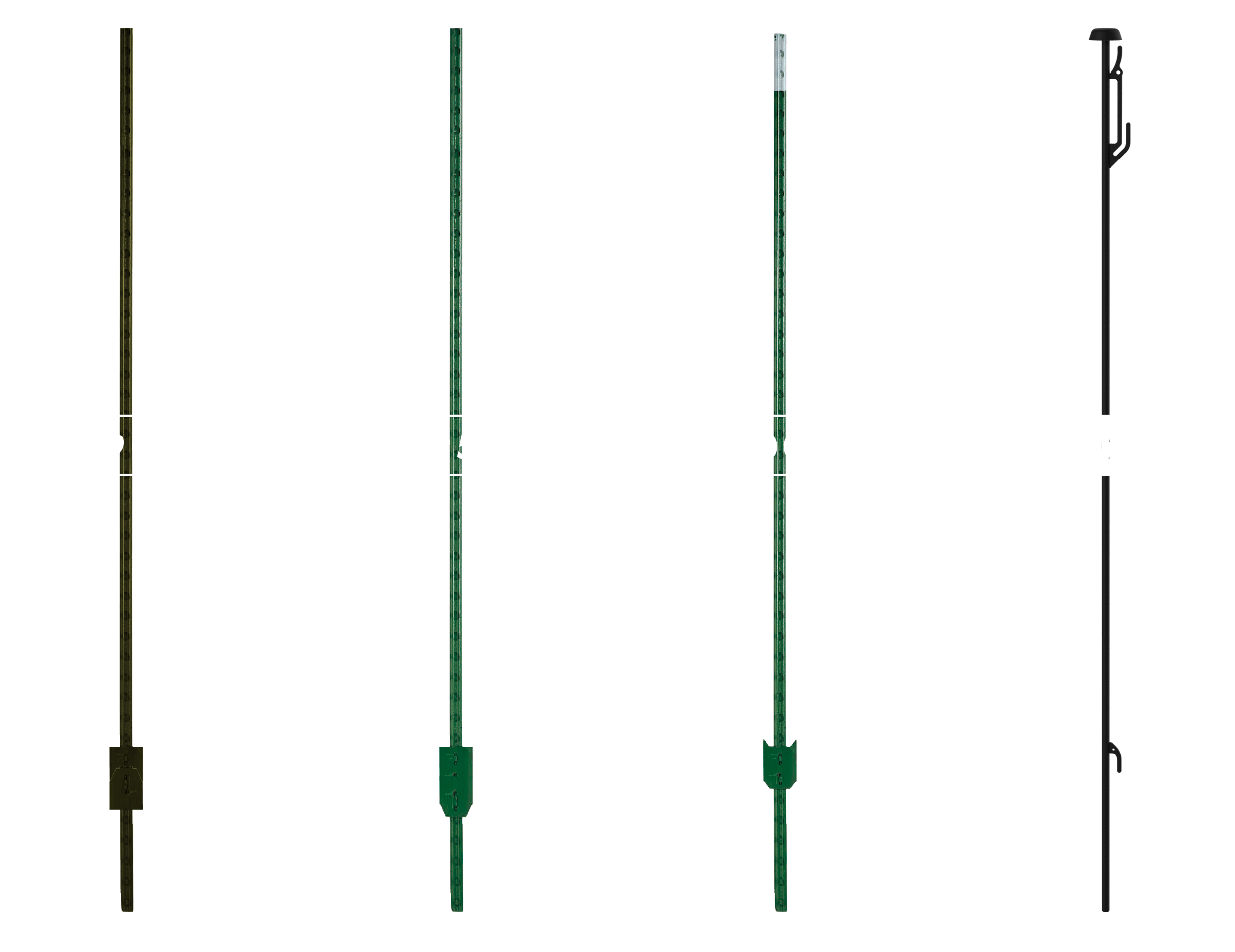
Common post types
| Post type | Best for | Watch-outs |
|---|---|---|
| U-post | Light garden, small-animal, short temporary wire | Limited strength for jobsite barriers |
| T-post | Farm wire, livestock, general temporary fencing | Driving, caps, clips, removal labor |
| Wood stake | Silt fence and short-term runs | Usually single-use; can split |
| Reusable barrier post | Construction, SWPPP, events, fleets, repeat deployment | Higher upfront cost; needs a storage plan |
Temporary fence posts for construction
Construction perimeters get installed, moved, reconfigured, and removed, often several times per project. There, install and teardown labor and jobsite safety usually matter more than the post’s unit price. See U-post vs T-post for the component-vs-system comparison and temporary fence rental cost for the break-even math, or run your footage through the temporary fence cost calculator.
On a jobsite, the number that controls your cost is not the post — it is the crew time the post adds every time the perimeter goes up and comes down:
What a temporary post actually costs on a jobsite
Post cost + driving labor + cap/attachment labor + teardown labor + bent/lost-post replacement + storage, divided across the number of redeployments. A driven commodity post is cheap to buy and expensive to handle; a reusable barrier post is the reverse. The crossover is the redeployment count.
That is the case a reusable barrier post is built for: Scepter states its system installs and dismantles up to 8–10x faster than conventional methods. For a one-time run, a driven post still wins on price.
How to install temporary fence posts
Driven steel posts (U-posts and T-posts) follow the same basic field rules; always defer to the project spec where one governs.
| Factor | Typical practice | Note |
|---|---|---|
| Embedment depth | About one-quarter to one-third of post length in the ground | Deeper in loose or saturated soil |
| Spacing | 6–10 ft for silt fence; 8–10 ft for light temporary mesh | Tighter on slopes, wind exposure, or heavy fabric |
| Driving | Post driver or sledge; wear eye protection | Exposed tops should be capped to reduce impalement risk |
| Hard ground | Pre-drive a pilot or pick the post to suit the soil | Where driving is impractical, a base-plated reusable post is an option |
Spacing and embedment for SWPPP silt fence are usually 6 to 10 feet apart and 12 to 18 inches deep per U.S. EPA stormwater guidance and state erosion-control standards — but the project spec is the authority. Reusable base-plated barrier posts change the install model entirely: they are set and removed without driving, which is the labor a redeploying contractor is paying for over and over.
Temporary fence posts for SWPPP and erosion control
Silt fence post type, spacing, and embedment are usually set by the project SWPPP or DOT spec. Confirm the requirement before substituting any post. See the silt fence installation guide for placement, posts, and inspection.
Temporary fence posts for events and public works
Event and work-zone barriers favor fast setup, consistent presentation, clean teardown, and reuse across many deployments — the case where a reusable post system tends to fit best.
When a reusable barrier post is — and is not — the right call
Best for: construction and public-works perimeters that redeploy, SWPPP contractors who reuse inventory across sites, rental fleets, and any crew paying driving-and-teardown labor repeatedly. Not best for: a single short run where lowest upfront post price is the only priority, or a permanent farm or structural fence — there, a driven post or wood-post system is the honest answer.
How to choose the right post system
| If your priority is... | Lean toward |
|---|---|
| Lowest upfront cost, light single use | U-post or wood stake |
| Strength for farm / wire fencing | T-post or wood-post system |
| Spec-compliant silt fence | The post the SWPPP / DOT spec prescribes |
| Repeat deployment, safety, clean reuse | Reusable safety-barrier post |
Not sure which post fits your project?
Send your use case, linear footage, and expected redeployments. A Scepter rep can compare U-posts, T-posts, rental panels, and reusable Scepter Posts for your site.
Frequently asked questions
What are temporary fence posts?
Temporary fence posts support fencing or mesh that is installed for a defined period and then removed — construction perimeters, SWPPP silt fence, event barriers, and public-works work zones. They include U-posts, T-posts, wood stakes, and reusable safety-barrier posts.
What is the best temporary fence post for construction?
It depends on the job. Commodity T-posts are cheap but add driving, capping, clipping, and removal labor. For perimeters that move and redeploy, a reusable safety-barrier post can reduce install and teardown labor and improve jobsite safety presentation. Match the post to the spec where one governs.
How are temporary fence posts different from permanent posts?
Temporary posts are chosen for fast install, teardown, and (sometimes) reuse, not for permanent structural anchoring. The cost that matters is installed-and-reused cost across redeployments, not just the unit price.
How deep should temporary fence posts be driven?
A common rule for driven steel posts is to set about one-quarter to one-third of the post length in the ground, going deeper in loose or saturated soil. SWPPP silt fence posts are typically driven 12 to 18 inches deep per U.S. EPA stormwater guidance. The project spec is always the authority where one governs.
How far apart should temporary fence posts be spaced?
Silt fence posts are usually spaced 6 to 10 feet apart per EPA and state erosion-control standards; light temporary mesh is commonly 8 to 10 feet. Tighten spacing on slopes, in wind, or with heavy fabric, and follow the project spec when it sets a value.
How do you install temporary fence posts without digging?
On open ground you do not dig at all — a steel temporary post is driven straight into the soil with a manual or powered driver, no concrete and no post holes, which is the main reason temporary posts go in and come out faster than permanent posts set in concrete. Where you cannot drive — asphalt, a concrete slab, or frozen or rocky ground — use a free-standing base-plated post weighted or anchored for the surface. Match the method to the ground, and confirm the project spec allows it for erosion-control or safety fencing.
How do you keep temporary fence posts from leaning or heaving?
Three things tip a temporary post: wind, soft ground, and frost. On driven runs, keep open barrier mesh rather than solid windscreen so wind passes through, tighten post spacing in exposed or gusty areas, and re-drive or brace any post that starts to lean. In soft or saturated soil, increase embedment depth or move to a wider base. Frost is the one crews forget: a post gripped by ground that freezes and thaws can heave upward over a winter, so a fence standing through a hard freeze needs its heaved posts re-set afterward — or use base-plated posts ballasted on the surface, which ride the freeze instead of being locked into it. Any solid windscreen on a base-plated run needs rated stabilizers or earth anchors, not the feet alone.
How do you remove temporary fence posts?
Driven steel posts are pulled straight back out with a post puller or a lever-style jack that grips the post and lifts it from the soil — no digging or breaking concrete, unlike permanent posts. Planning teardown matters as much as install: removal labor and post damage are real costs across repeat jobs, which is where a reusable post system designed for fast, low-damage removal can pay back over many deployments.
Sources & standards
Figures and requirements on this page were checked against primary and industry sources. Always confirm against the governing permit, spec, or a current quote.
- ASTM A702 — Standard Specification for Steel Fence Posts and Assemblies
- EPA — Stormwater discharges from construction activities (SWPPP use)