
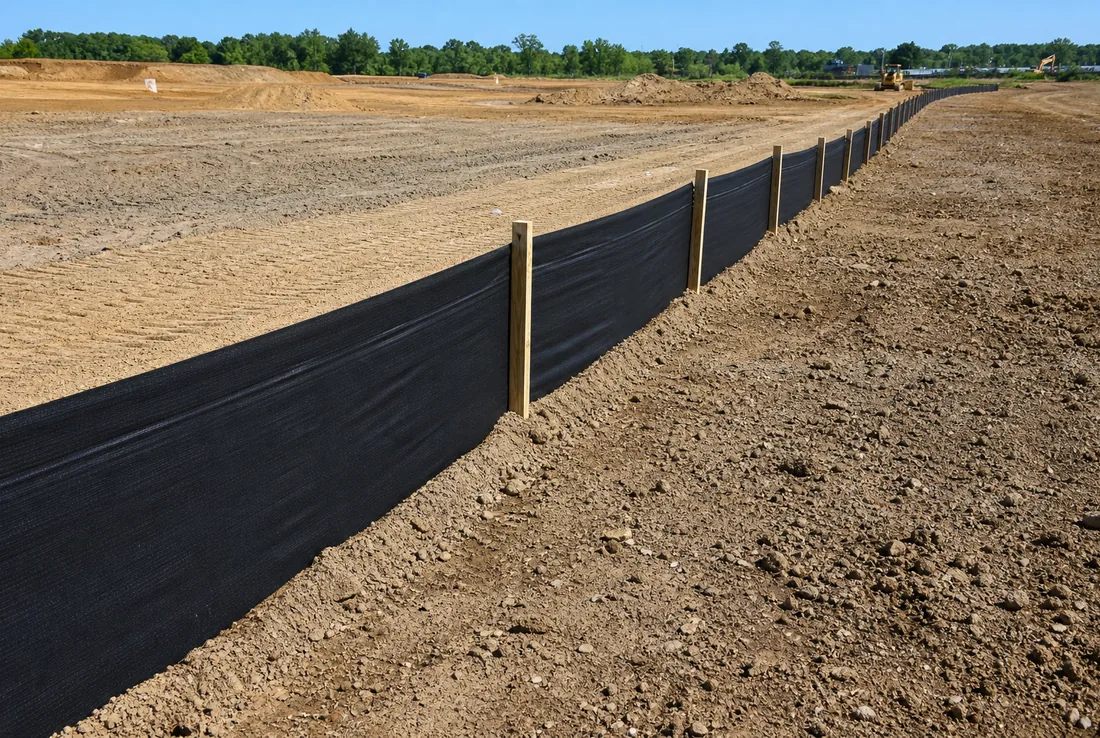
Installed silt fence commonly costs about $2 to $7 per linear foot, with most standard jobs near $3 to $5. Materials alone (fabric plus stakes) are often $0.85 to $2 per foot, and labor is typically 70–80% of the installed price. The real number depends on install method, soil, fabric type, spec, region, and quantity — these are planning ranges, not a quote. Below are the cost drivers, a per-foot breakdown, and where post choice changes the lifecycle total. For how to install it, see the silt fence installation guide.
Silt fence cost per foot
A silt fence — also called a sediment control fence or sediment fence — is priced per linear foot, like most erosion-control work. Use these as planning ranges and confirm against a local quote and the project spec, which is the authority on what you may install.
| Scope | Typical range (per linear ft) | Notes |
|---|---|---|
| Materials only (fabric + stakes) | $0.85 – $2.00 | Standard fabric; install labor not included |
| Installed, standard silt fence | $2 – $7 (often $3 – $5) | Labor is typically 70–80% of this |
| Reinforced / wire-backed fabric | $4 – $9 | Heavier fabric, wire backing, deeper trench |
| Chain-link "super silt fence" | $20 – $30 | Chain-link backing for high-flow / severe sites |
| Maintenance + removal | Added cost | Inspections, storm repair, pull and disposal |
The spread is wide because silt fence is labor-driven, not material-driven: labor is typically 70–80% of the installed cost, and small jobs often carry a $500–$1,000 contractor minimum. The same 1,000 feet of fabric can cost very differently to put in the ground depending on how the posts go in and how the fabric is keyed into the soil.
Silt fence cost estimator
Enter your run to estimate posts, fabric, and an installed-cost range. It is a planning guide, not a quote — the governing spec and a local bid are the authority.
Estimate posts, fabric, and an installed-cost range for a silt fence run. This is a planning guide, not a quote — final cost depends on site access, soil, local labor rates, and the governing SWPPP or DOT spec.
Assumptions: fabric includes ~10% overlap; rolls ~100 ft. Materials standard $0.85–$2.00/ft, wire-backed $1.50–$3.50/ft. Installed standard $2–$7/ft (often $3–$5), wire-backed $4–$9/ft. Labor is typically 70–80% of installed cost. Ranges, not a bid.
What drives silt fence cost
| Cost driver | Lower cost | Higher cost |
|---|---|---|
| Install method | Static slicer / trencher on open ground | Hand-driven posts, rocky or tight access |
| Soil & terrain | Flat, workable soil | Slopes, saturated or rocky ground |
| Fabric type | Standard woven fabric | Reinforced or wire-backed 'super' fence |
| Spec requirements | Basic post type and spacing | DOT spec: trenching, deep embed, tight spacing |
| Quantity | Long continuous runs | Short, broken, detail-heavy runs |
Silt fence post spacing and embedment are commonly 6 to 10 feet apart and 12 to 18 inches deep per U.S. EPA stormwater guidance and state erosion-control standards — but the project spec governs, and tighter spacing or deeper trenching raises labor. See temporary fence posts for post types and install specs.
Materials vs labor vs lifecycle
The unit price of a post or a roll of fabric is the part of the cost that is easiest to see and the least important on a real project. The cost that controls the budget is labor — install, maintenance, and removal — multiplied across the life of the job.
The cost that actually moves the budget
Fabric + posts + install labor (trench/drive/attach) + inspection and storm repair over the project
- teardown and disposal. On a single short run, materials lead. On a phased or long-duration erosion-control job, install and teardown labor dominate — and a post that goes in and comes out faster, or gets reused, can lower the total even at a higher unit price.
How to reduce silt fence cost without failing the spec
- Install it right the first time. A blowout after a storm means re-mobilizing a crew, replacing fabric, and possibly a compliance finding. Correct embedment and a keyed-in trench are cheaper than rework. The installation guide covers placement and keying.
- Match the post to the job, within the spec. Where the spec allows it, reusable posts cut the driving-and-pulling labor that repeats every phase. A system like Scepter’s — a service life exceeding four years and a hook-captured cloth that lifts out intact, so teardown produces zero waste and no fabric-disposal line item — spreads its higher unit cost across many redeployments. The more phases or sites you run it across, the better that math gets.
- Plan for maintenance and removal up front. Inspection cadence, storm repair, and disposal are real line items; pricing only the install understates the job.
Where reusable posts change silt fence cost — and where they don't
Worth comparing: phased erosion-control work, long-duration sites, and contractors who reuse inventory across jobs — the redeploy labor saved offsets the higher unit cost. Not worth it: a single short run that goes in once and is disposed of, where the spec prescribes a cheap stake and lowest material price wins. Always confirm the spec before substituting any post.
Cost of getting it wrong
Silt fence is a compliance control, not just a fence. A failed or non-compliant install can mean stop-work, re-installation, and stormwater-violation exposure — costs that dwarf the per-foot price. See silt fence requirements for the specs and inspection cadence you are held to. That is why estimators price silt fence as installed-and-maintained-to-spec cost, not as a material line. To estimate the install-and-teardown labor side against rental or reusable options, use the temporary fence cost calculator.
Pricing silt fence or erosion control for a bid?
Send your linear footage, spec, and number of phases. A Scepter rep can compare stakes, T-posts, and reusable Scepter Posts for the install-and-teardown labor on your job.
Frequently asked questions
How much does silt fence cost per foot?
Installed silt fence commonly runs about $2 to $7 per linear foot, with most standard jobs landing near $3 to $5. Materials alone (fabric plus stakes) are often $0.85 to $2 per foot, and labor is typically 70 to 80 percent of the installed price. Small jobs often carry a $500 to $1,000 contractor minimum. These are planning ranges only — actual price depends on soil, terrain, install method, spec, region, and quantity, so confirm with a local quote.
What drives the cost of silt fence?
The main drivers are install method (hand-driven posts vs trencher or static slicer), soil and terrain, fabric type (standard vs reinforced or wire-backed), linear footage, and the spec — DOT and SWPPP specs can dictate post type, spacing, embedment, and trenching, which all move labor cost. Maintenance, inspection, repair after storms, and removal/disposal add to the lifecycle total.
Is it cheaper to install silt fence yourself or hire a contractor?
On a small run, buying fabric and posts and installing by hand is the lowest material cost. On a construction site, the labor to trench, set posts, attach fabric, maintain, and remove usually dominates — which is why crews look at installed-and-maintained cost across the project, not just material price. The spec, not price, governs what you are allowed to install.
Does the type of post change silt fence cost?
Yes, mostly through labor. Wood stakes and steel T-posts are cheap to buy but add driving and teardown labor and can be single-use. Where the spec allows reusable posts, the higher unit cost can be offset across redeployments by lower install and teardown labor — most relevant on phased or repeat erosion-control work.
Sources & standards
Figures and requirements on this page were checked against primary and industry sources. Always confirm against the governing permit, spec, or a current quote.
- EPA — Stormwater discharges from construction activities
- ASTM D6461 / D6462 — silt fence material and installation standards